What H1 2026 Tells Us About the Future of Greek Hospitality
The first half of 2026 confirms that Greece remains one of Europe’s strongest tourism destinations. Demand is resilient, international interest remains high, with some exceptions and travellers continue to consider Greece for their holidays. But beneath these encouraging numbers, something far more interesting is happening. The way people travel is changing. Based on demand data from the portfolio of boutique hotels managed by Square Lime Hospitality Management, we are seeing clear shifts in booking behaviour, destination preferences and traveller expectations.
Last-minute is becoming the new normal
While confirmed bookings during March and April were slower compared to the same period last year, demand accelerated significantly from early June, driven by a strong increase in last-minute reservations. Travellers are still choosing Greece—but they are waiting longer before committing. Greater flexibility, value for money and confidence in last-minute availability are reshaping booking windows. For hotels, this means revenue strategies, pricing and marketing must become increasingly agile.
Beyond the traditional hotspots
Athens continues to perform well, Mykonos & Santorini seem to maintain the demand level but with lower conversion, and some of the strongest growth is now coming from destinations such as Paros and Naxos. Today’s travellers are actively seeking places that offer authenticity, slower rhythms, local culture and meaningful experiences rather than simply iconic landmarks. This shift creates significant opportunities for emerging destinations and boutique hospitality brands that can tell a distinctive story.
The tourism season is extending further into the autumn months
Following a more cautious start to the season, due to the geopolitical issues, we are witnessing the gradual extension of the tourism season. Demand for September, October and even November continues to strengthen, as many travellers shifted their travel dates from the beginning to the end of season. Extending the season is not simply about increasing occupancy—it supports local economies, improves operational sustainability and reduces the pressure associated with peak-season tourism.
From the Experience Economy to the Connection Economy
Perhaps the most important insight is not found in the numbers. For years, hospitality focused on creating memorable experiences. Today, travellers are looking for something deeper. They want genuine human connections, authentic destinations, local culture and a sense of belonging. They want to connect with places—not simply visit them. This emerging Connection Economy is redefining what creates value in hospitality.
Why boutique hotels are well positioned
Boutique hotels naturally align with these evolving expectations. Their scale allows for personalised service, authentic storytelling and meaningful relationships with guests—qualities that are increasingly becoming competitive advantages rather than optional extras.
Looking ahead
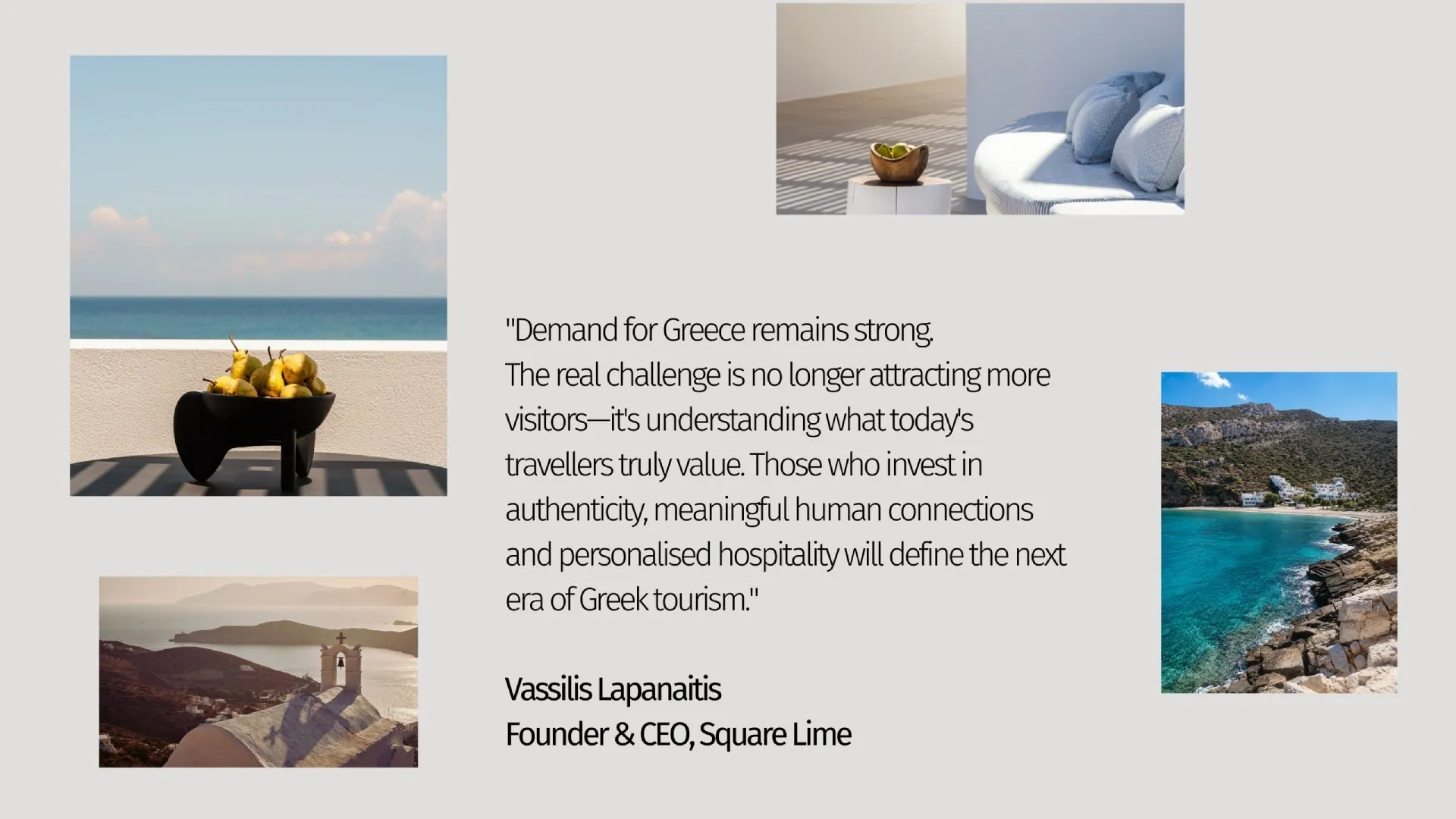
Demand for Greece remains strong, but success will increasingly depend on understanding how travellers are changing—not simply how many are travelling. Hotels and destinations that embrace flexibility, authenticity, right yielding actions, personalised hospitality and genuine human connection will be the ones best positioned for long-term success. Because the future of tourism is no longer defined only by occupancy. It is defined by the value we create—for travellers, local communities and destinations alike.